We all understand the pivotal role daylight plays in enriching the quality of living spaces — and, by extension, the overall quality of life. Beyond its contribution to vitamin D synthesis, daylight brings visual comfort to homes, expands spaces, reduces the need for artificial lighting, fosters a seamless connection between indoor and outdoor environments, and promotes a healthy and enjoyable lifestyle.
But daylight is not just a nice-to-have. In the best residential projects, it is a design driver — something that shapes every structural decision from the very first sketch.
The Everit Avenue Residence
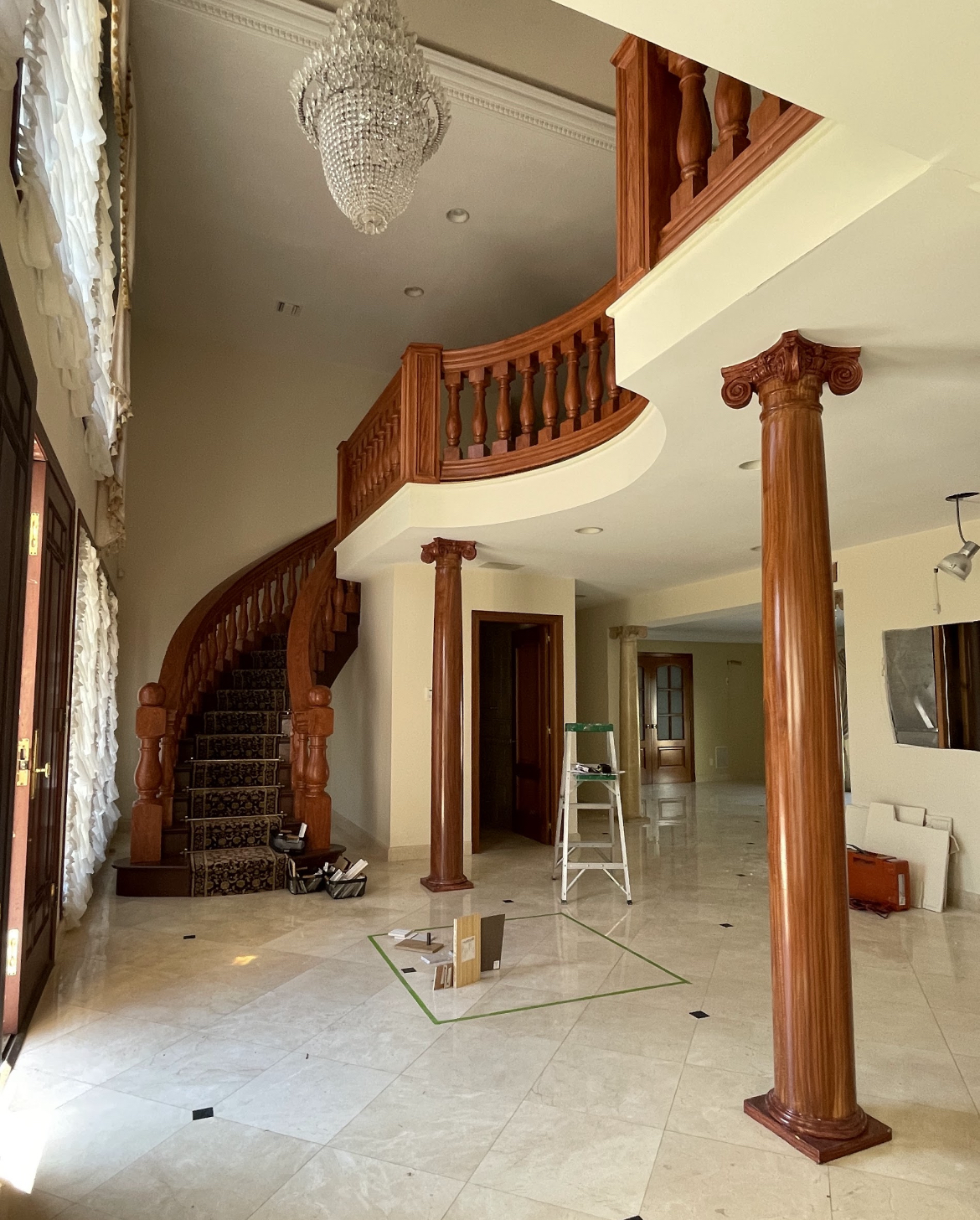
The Everit project offered a striking lesson in the gap between what a home appears to offer and what it actually delivers. The first thing that struck us when we walked in was the large windows at the front of the house — generous openings that should have been flooding the interior with light. And yet, stepping inside, the experience was the opposite: darkness, tightness, a noticeable sense of claustrophobia.
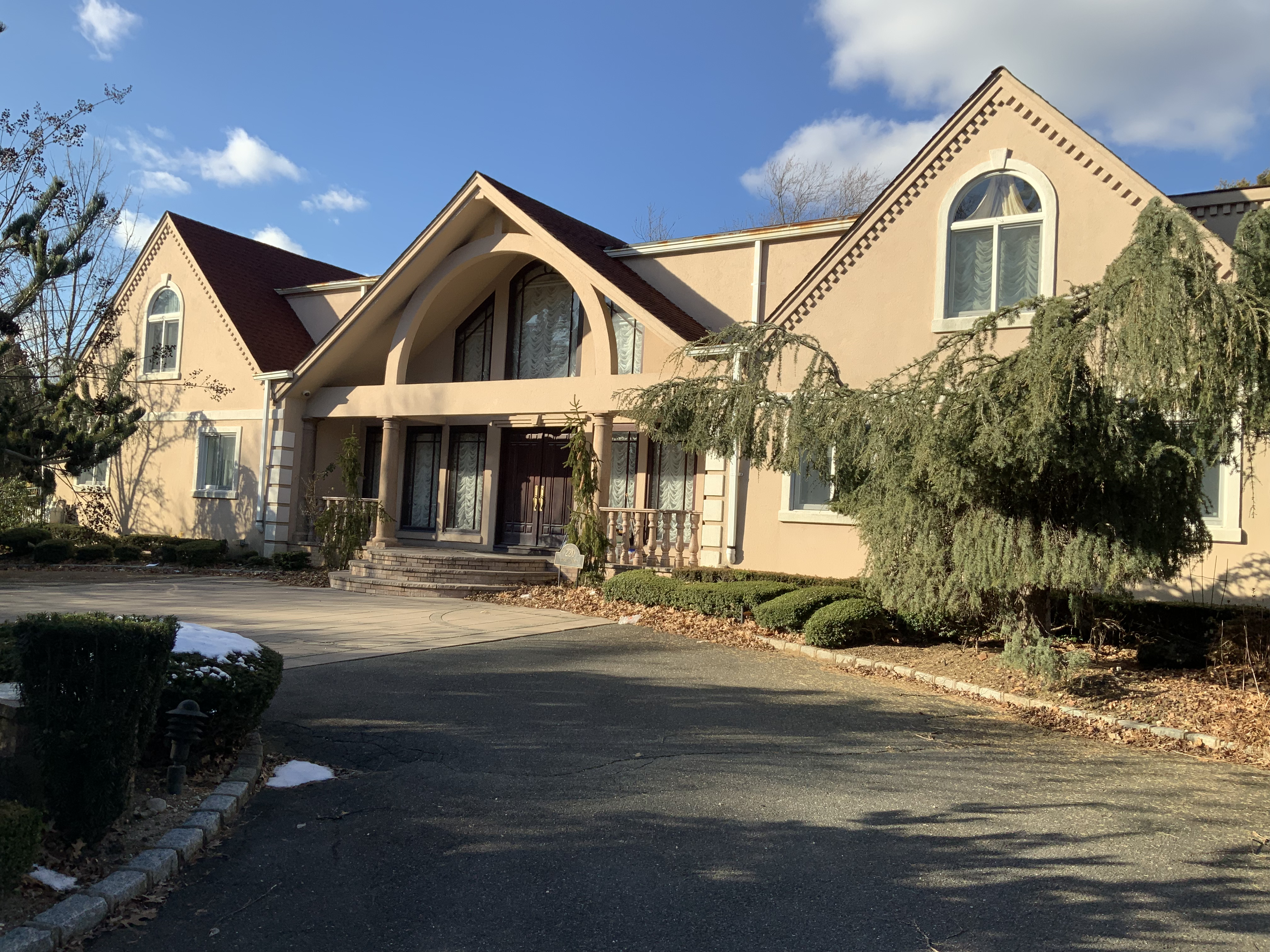
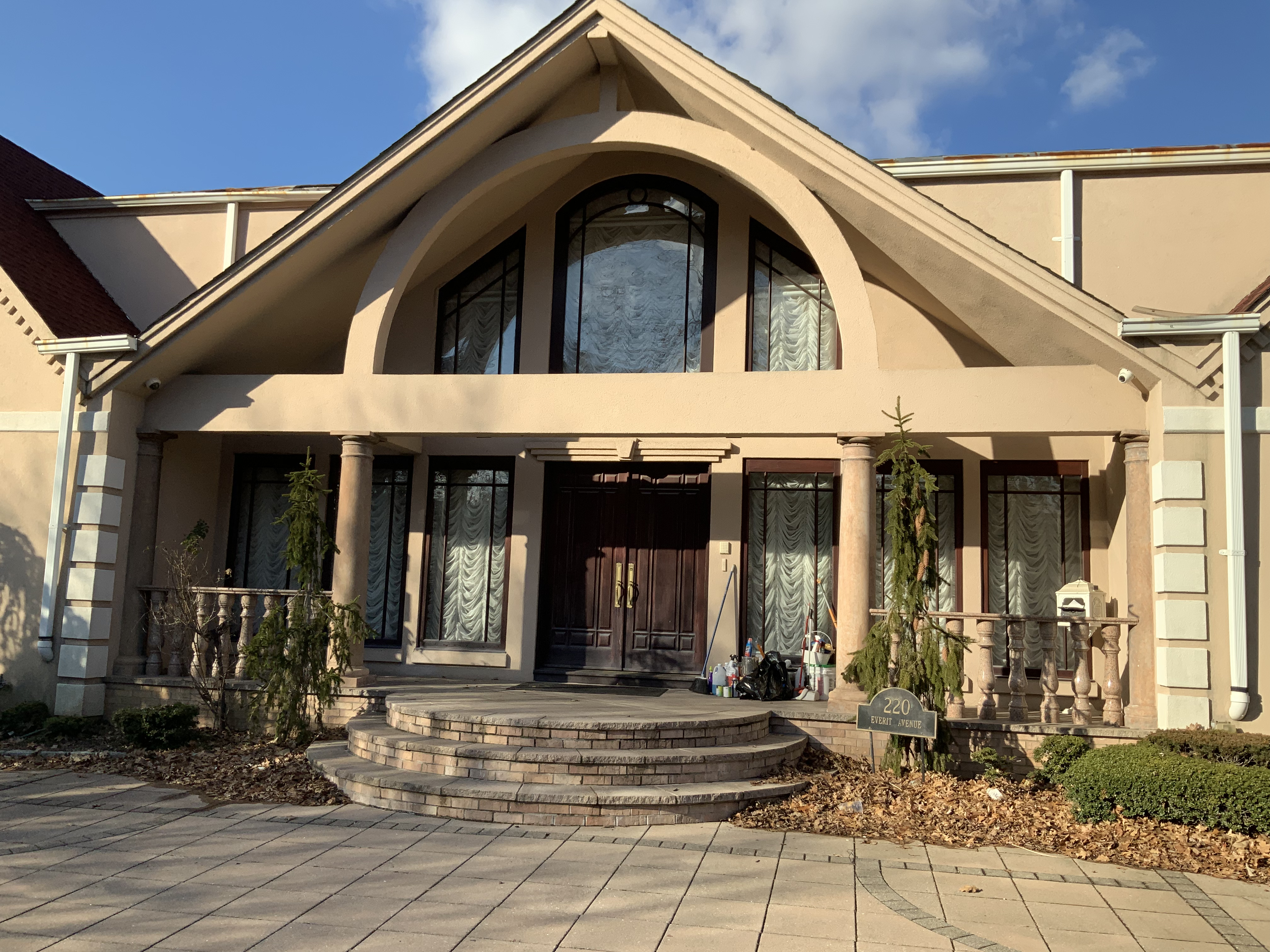
The windows existed, but the light had nowhere to go. The interior layout was blocking it at every turn.
Opening the Space to Light
The first step was clearing the exterior — opening it up so that daylight could actually enter through those large windows. From there, the work moved inward.
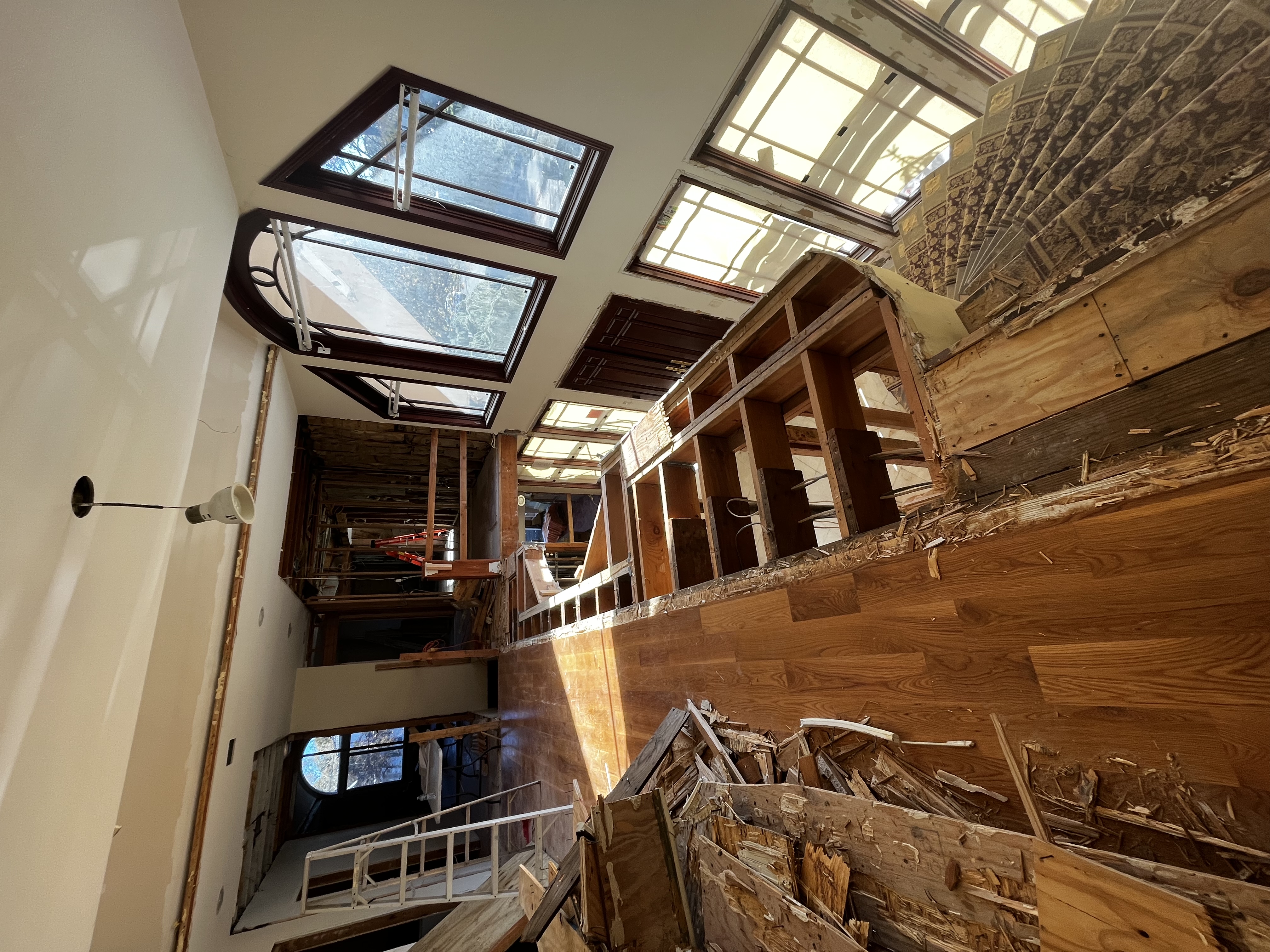
Our core objective was to establish a connection between the front and back of the house, so that daylight could permeate from both directions simultaneously. To achieve this, we:
- Removed the powder room that was obstructing the entry
- Opened walls that were blocking the view from the front door
- Eliminated the partition between the dining room and the living room
- Retained only the 360° freestanding fireplace as a central element
- Expanded the opening to the backyard with glass doors
A Structural Transformation
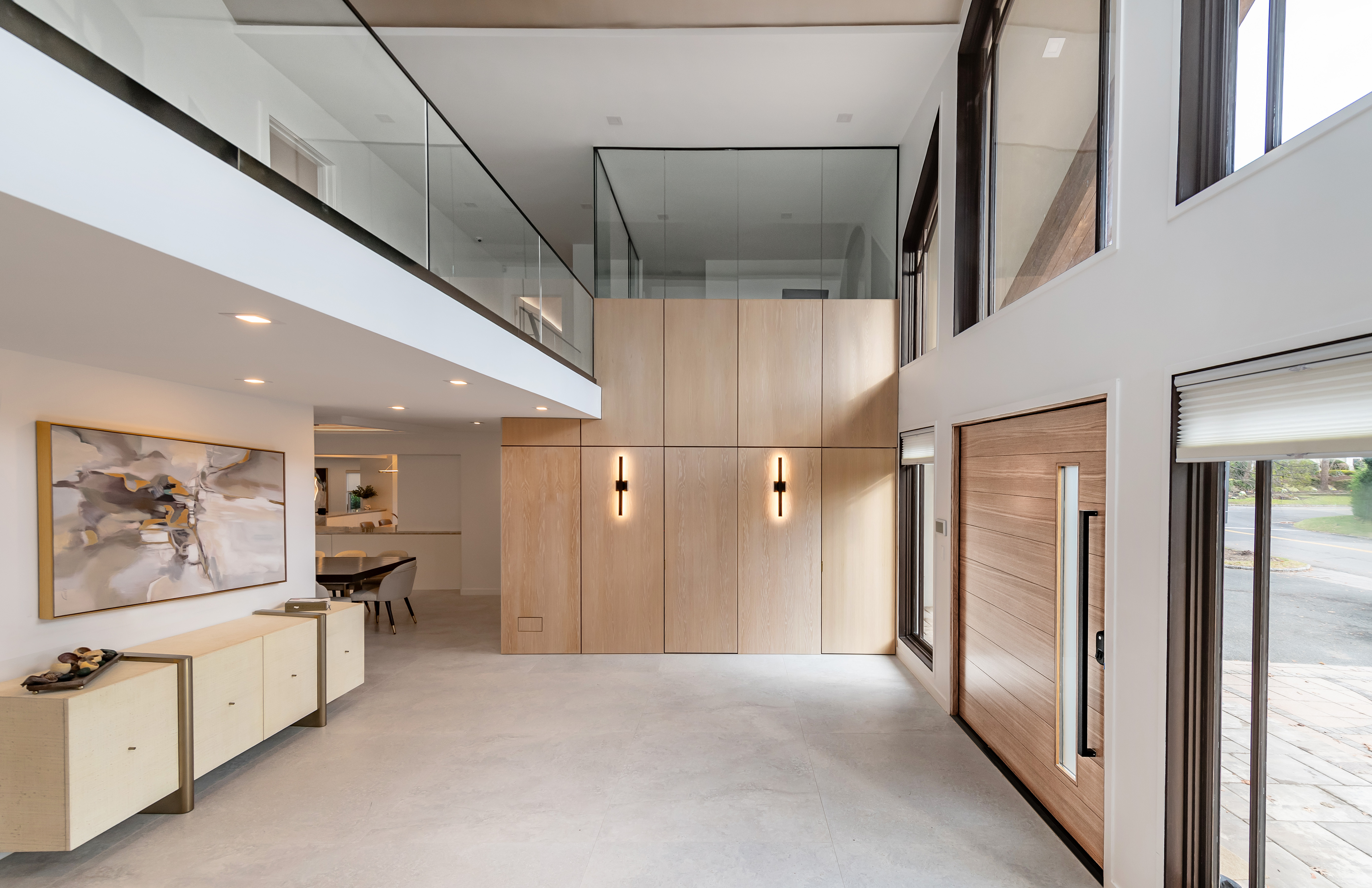
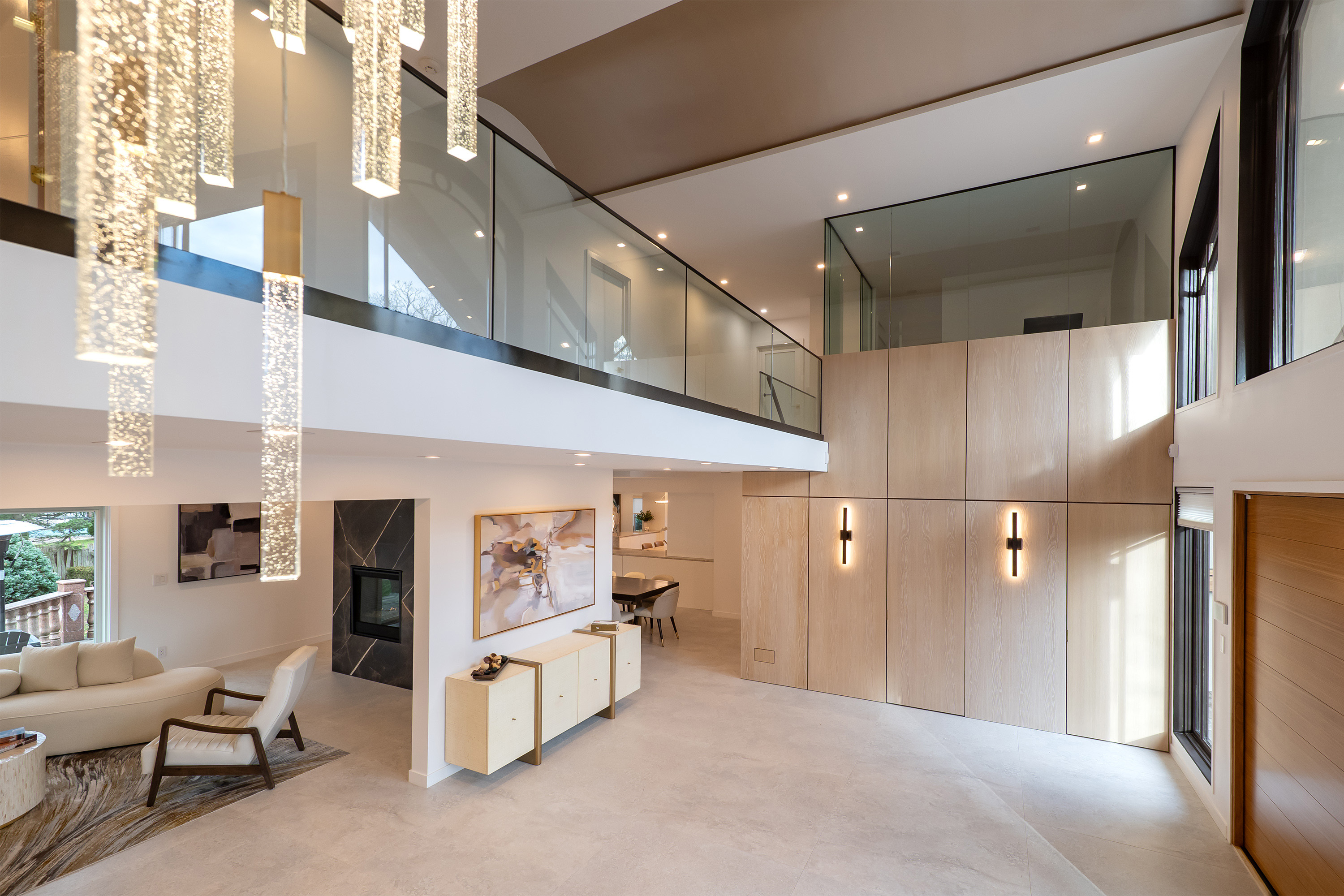
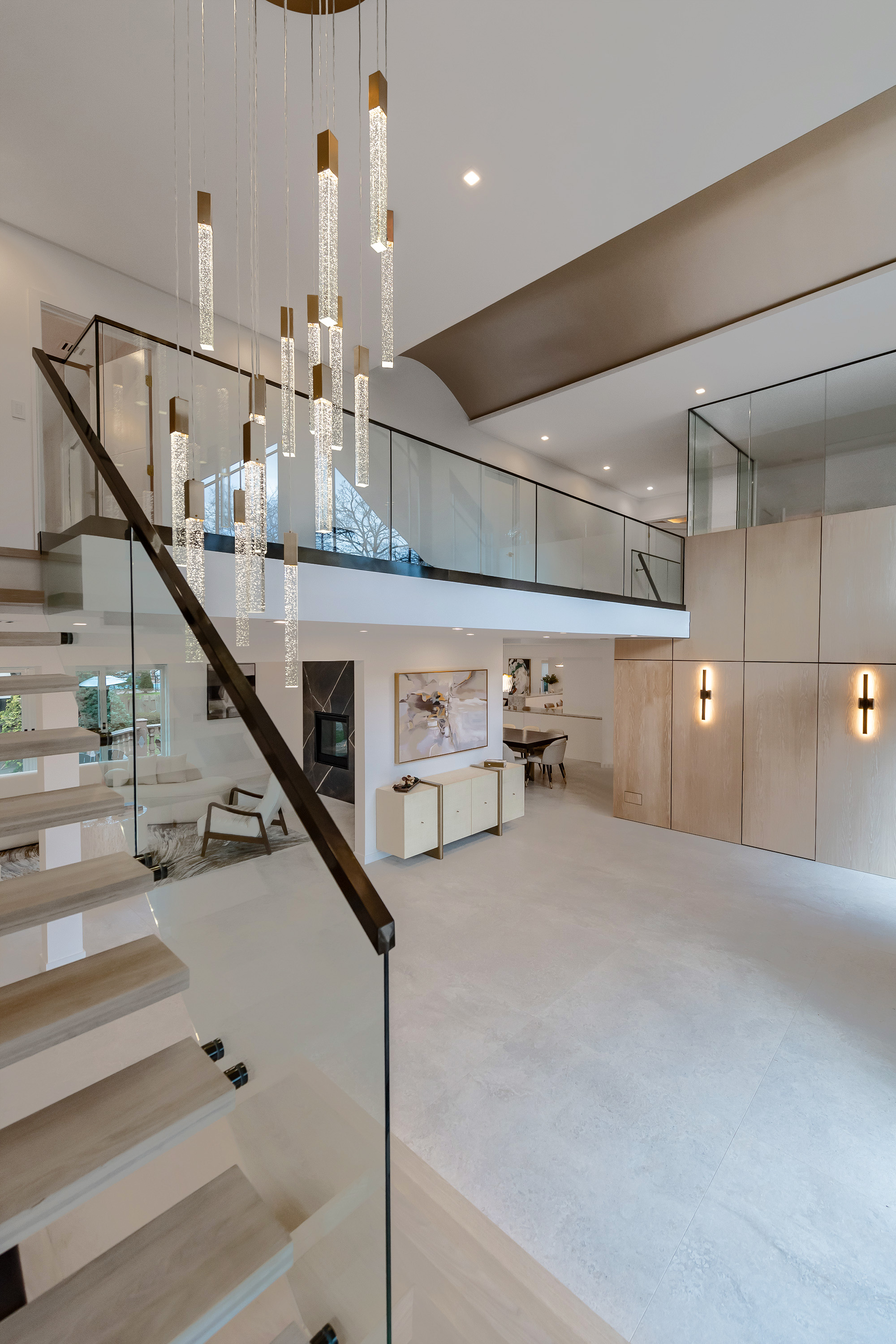
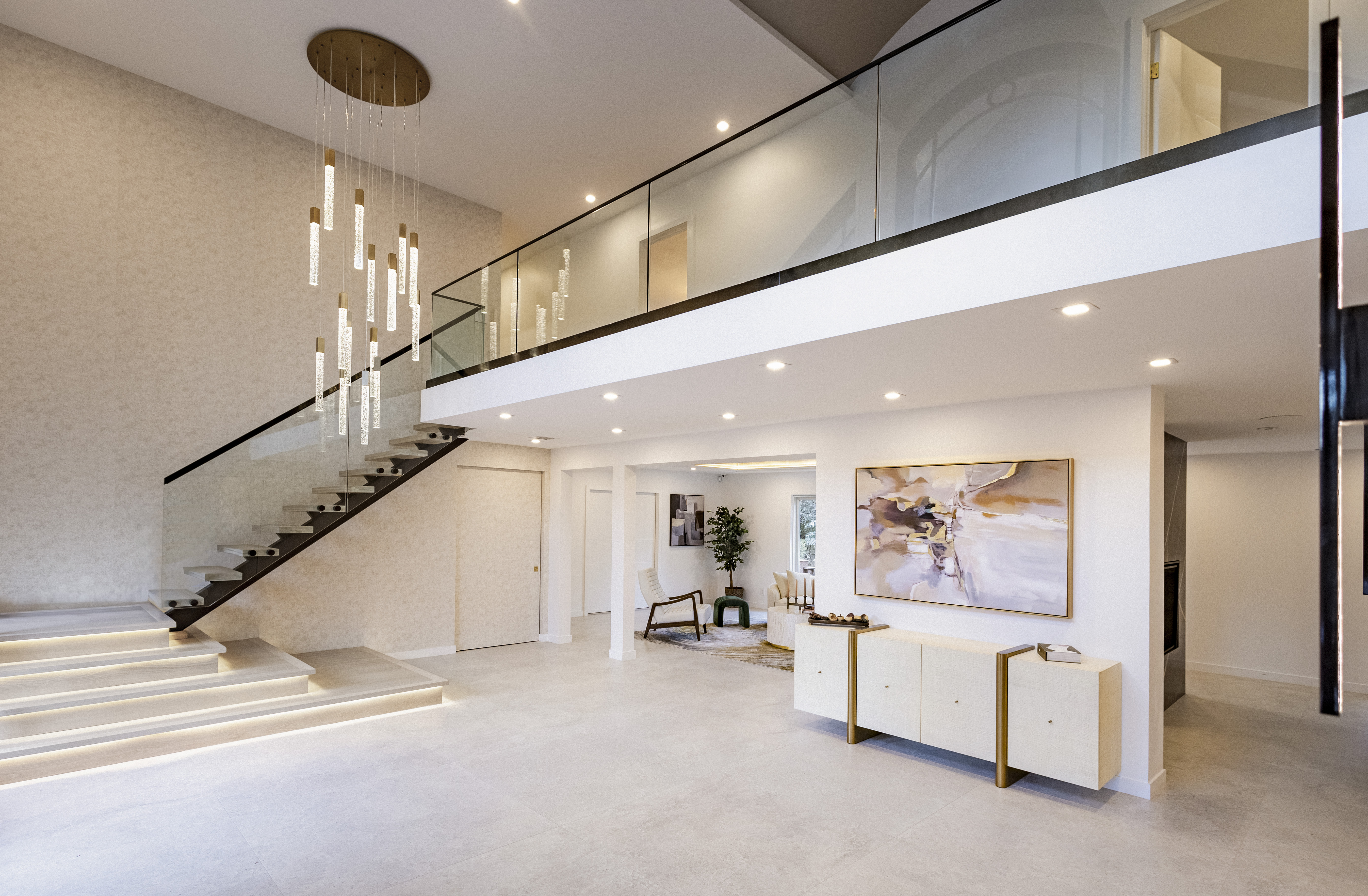
To further amplify the light, we pushed the second-floor slab backward to enhance the double-height area of the entry and increase the incoming daylight from above. This was not a minor intervention — it required introducing new steel beams inserted into the floor and connected to the rear of the house with additional steel column support. The result: a column-free entry and a cantilevered second-floor slab that opens the space dramatically upward.
"Daylight is not a finish. It is the first material you design with — and the most powerful one available."
The Result
All of these measures collectively allowed an abundance of daylight to permeate the entire space. A new extra-wide pivot door at the entry now provides a direct view straight through to the backyard — the staircase structure and living space visible in between. The home that once felt dark and tight now feels open, grounded, and alive.
Daylight is a key design principle in every residential project we take on. It is not something we consider at the end — it is the lens through which every layout decision is made. We aim always to create spaces that are not only aesthetically beautiful, but genuinely healthier for the people who live in them.